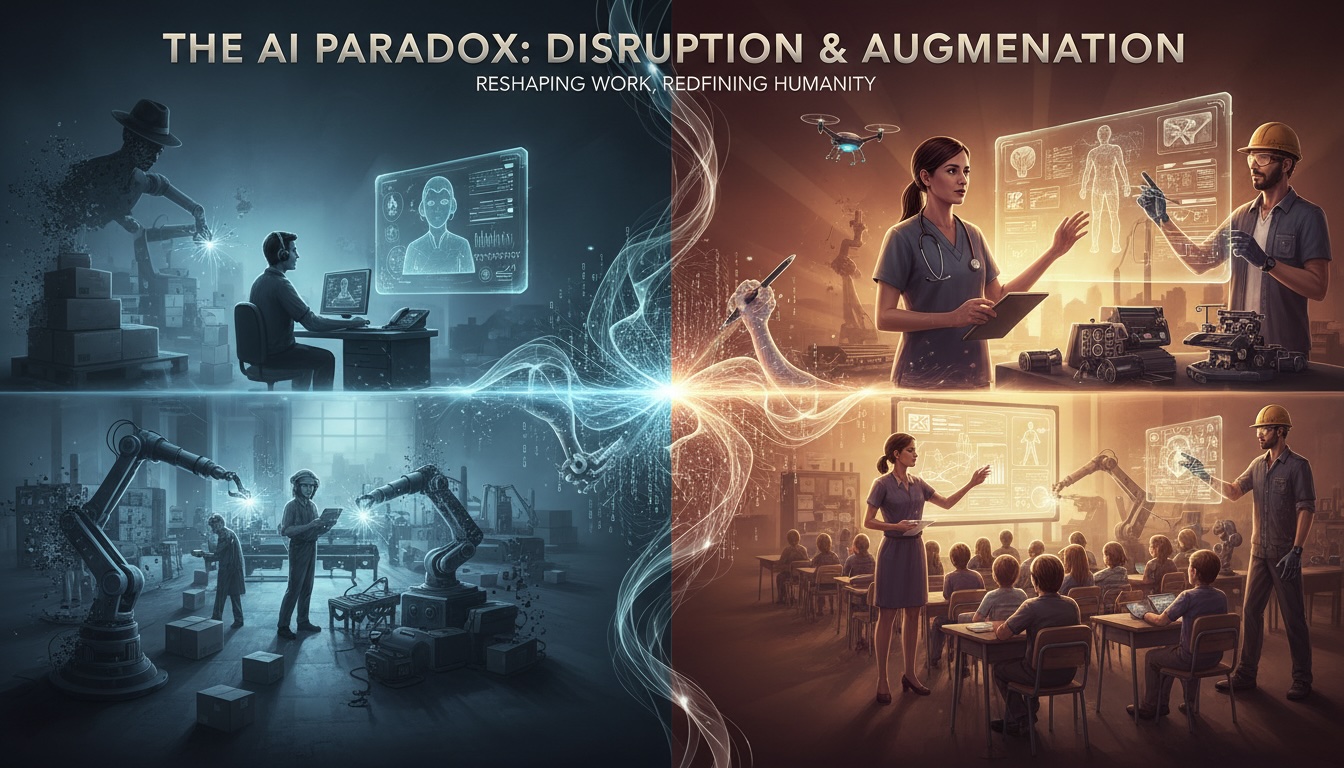

Artificial intelligence is going to eliminate a lot of jobs. That much is real. But the popular version of this story - that AI will simply replace humans across the board - is too simple, and probably wrong.
What AI actually does is more selective. It crushes tasks before it crushes occupations. It automates patterns before it replaces judgment. It performs well in environments where the work is repetitive, rules-based, measurable, and digitally structured. It struggles more where the job depends on trust, physical presence, ambiguity, ethics, persuasion, taste, or emotional intelligence.
So yes, many jobs will shrink, change, or disappear. But some categories of work are much more resilient than others. The safest jobs in the AI era will not necessarily be the most prestigious or the most technical. They will be the ones that combine human judgment with messy real-world complexity.
First, what AI is likely to destroy
The jobs most exposed to AI share a few traits:
- They rely on repetition. If the work follows the same steps over and over, AI can usually learn the pattern.
- They happen entirely on a screen. Digital tasks are easier to automate than physical ones.
- They are easy to measure. If performance can be reduced to speed, accuracy, or cost per task, machines tend to win.
- They require low-stakes judgment. If mistakes are acceptable or easily reversible, companies will automate faster.
That puts a lot of pressure on roles like basic data entry, routine customer support, transcription, simple bookkeeping, templated marketing copy, junior research aggregation, and certain forms of administrative work. Even in fields like law, finance, design, and programming, the most routine parts of the job are already being compressed.
This does not always mean a job vanishes overnight. Often it means one person using AI can now do the work that previously required three, five, or ten. From the worker's point of view, the effect can feel the same.
The key question is not "Will AI take this job?"
The better question is: Which parts of this job are humanly hard to replace?
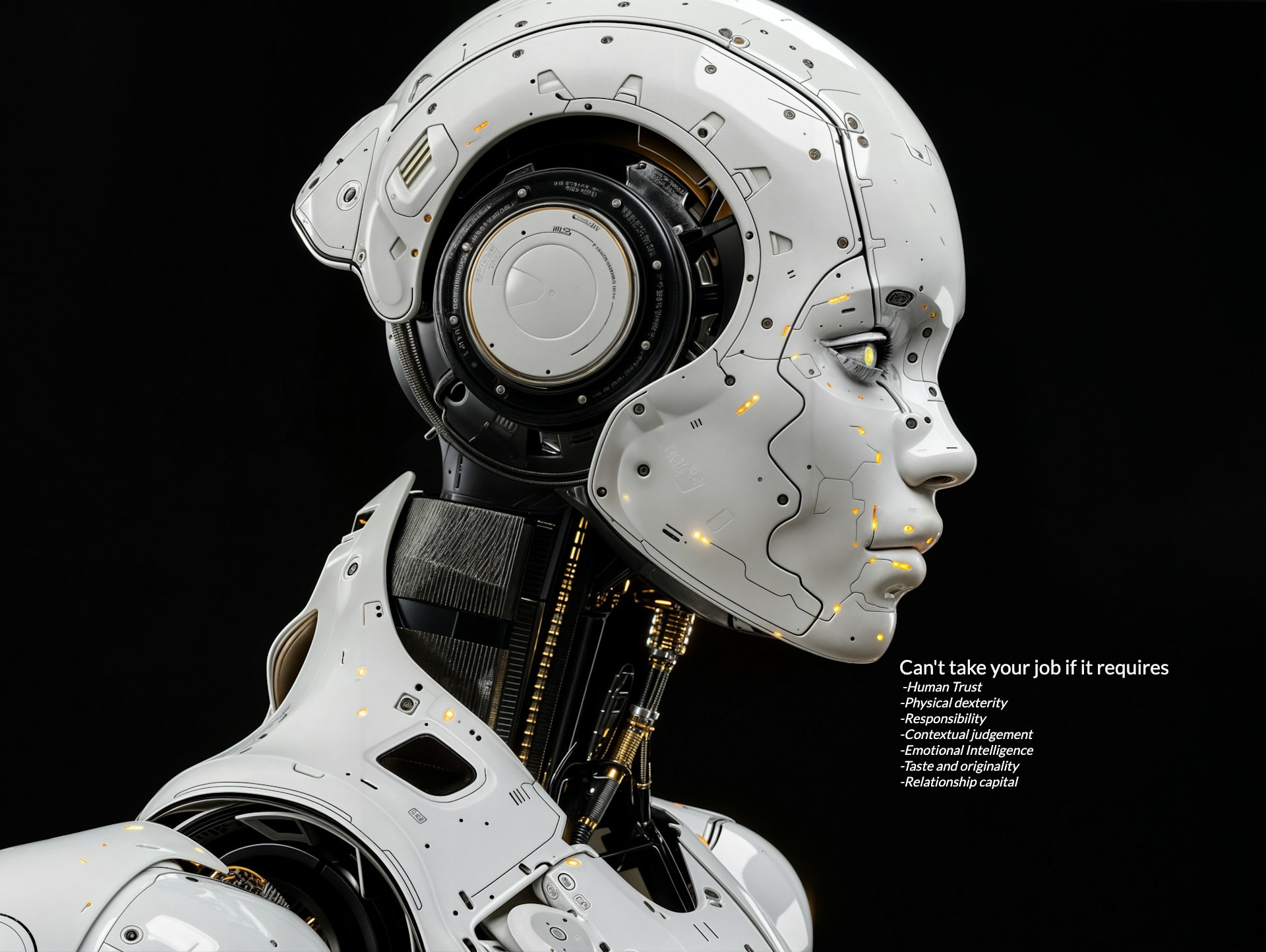
A job becomes more durable when it includes one or more of these ingredients:
- Human trust - people want a person, not just an answer.
- Physical dexterity - the work happens in an unpredictable real-world environment.
- Responsibility - someone must be accountable when things go wrong.
- Contextual judgment - rules are incomplete, situations are messy, and tradeoffs matter.
- Emotional intelligence - success depends on reading people, not just processing information.
- Taste and originality - the value comes from distinctive human perspective, not average output.
- Relationship capital - people are paying for confidence, credibility, and long-term trust.
Those are the pressure points where AI still struggles - and where human work is likely to remain valuable.