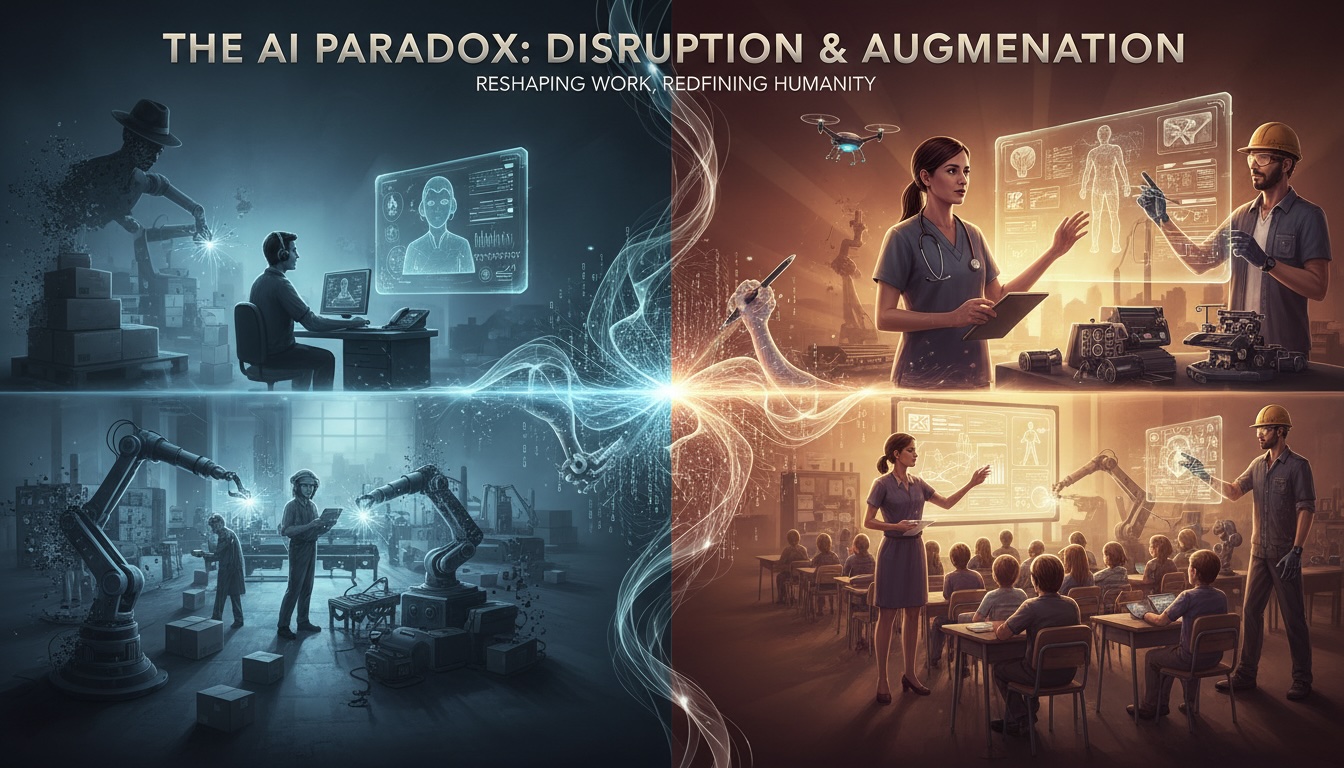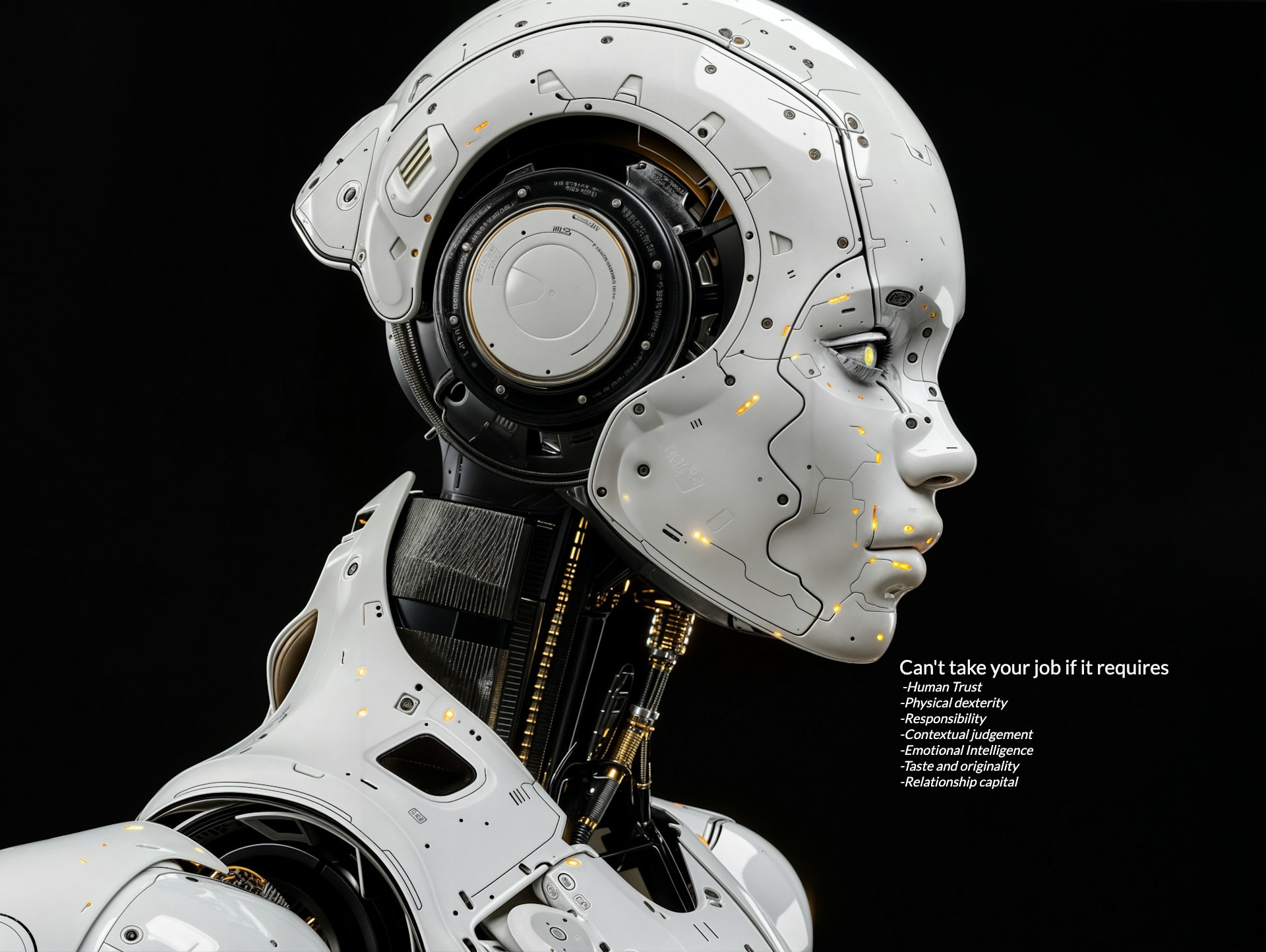

Jobs most likely to survive the AI revolution
1. Skilled trades
Electricians, plumbers, HVAC technicians, mechanics, welders, and similar hands-on trades are in a strong position.
These jobs require physical movement in chaotic environments: old buildings, broken systems, weather exposure, unusual layouts, safety risks, and one-off problems. An AI can help diagnose issues, surface manuals, and suggest fixes. But it cannot easily crawl under a sink, work inside a live wall, calm a frustrated homeowner, and improvise around whatever strange shortcut was taken during a renovation twenty years ago.
The more the physical world refuses to be standardized, the safer these jobs become.
2. Healthcare roles that depend on human contact
Doctors will use more AI. Nurses will use more AI. Therapists will use more AI. But many of these professions are not going away.
Patients do not just need information. They need reassurance, interpretation, trust, bedside manner, and accountability. A model can summarize symptoms or flag risk factors. It cannot fully replace the relationship between a nurse and a frightened patient, a therapist and a grieving client, or a physician and a family making a hard decision.
Healthcare has automatable tasks, but the deeply human core of care remains resilient.
3. Teachers, coaches, and mentors
AI can explain algebra, summarize a novel, generate quizzes, and provide instant feedback. That will absolutely reshape education. But teaching is not just content delivery.
Great teachers motivate reluctant students, manage group dynamics, notice confusion that a student cannot articulate, and adapt to personality, family background, and confidence level. Coaches and mentors do something similar for adults: they push, interpret, guide, and hold people accountable.
Information is cheap. Human development is not.
4. Leadership and people management
Managers who exist mainly to relay status updates may be in trouble. Leaders who align teams, resolve conflict, make tradeoffs, and take responsibility will remain essential.
In periods of uncertainty, organizations need people who can make decisions with incomplete information and absorb the social consequences of those decisions. AI can present options. It can model scenarios. But choosing among competing priorities - profit, morale, risk, ethics, timing - is still a human function.
The future probably contains fewer bureaucratic managers and more high-accountability leaders.
5. Sales and relationship-based business roles
Transactional sales will become more automated. Relationship-driven sales will not.
When the stakes are high - enterprise contracts, strategic partnerships, complex consulting deals, recruiting, fundraising - people still buy from people. Trust matters. Timing matters. Reading hesitation matters. So does knowing when to push, when to stay quiet, and how to navigate politics inside an organization.
AI can write follow-up emails and analyze buyer intent. It cannot fully replace human rapport.
6. Creative work at the top end
AI will flood the market with average content. That means generic writing, commodity design, stock-style visuals, and formulaic media are all vulnerable.
But the opposite may also happen: truly distinctive creative work becomes more valuable. The people most likely to survive are not those producing bland volume, but those with recognizable taste, voice, worldview, and originality.
The copywriter who churns out interchangeable landing pages is exposed. The writer with sharp ideas and a point of view is more defensible. The designer who follows templates is at risk. The creative director who defines a brand's identity is harder to replace.
In a world full of machine-made sameness, human style becomes a premium.
7. Entrepreneurs and builders
Founders, operators, and small business owners will face disruption, but they also gain leverage. AI makes it easier to research, prototype, market, automate, and scale. That means more individuals can do what used to require a large team.
The people most likely to thrive are those who can combine tools, judgment, speed, and customer understanding. Entrepreneurship survives because it is not one task. It is a bundle of decisions made under uncertainty.
AI may reduce the cost of building. It does not eliminate the need to decide what should be built.
8. Care work
Childcare workers, eldercare workers, social workers, aides, and other caregivers are more durable than many "knowledge jobs" people assume are safer.
These roles are emotionally demanding, physically present, and deeply relational. They involve patience, empathy, intuition, and trust. They also often happen in homes, schools, clinics, and community settings that are difficult to automate cleanly.
This work has historically been undervalued. The AI era may expose just how essential it really is.
9. Crisis-response and high-stakes decision roles
Emergency responders, military leaders, crisis negotiators, certain legal advocates, and others working in fast-moving, high-consequence environments are likely to remain human-led for a long time.
In these settings, facts are incomplete, conditions change quickly, and moral responsibility cannot simply be outsourced. AI may assist with information gathering and scenario analysis, but the person making the final call still matters enormously.
The higher the stakes, the more society tends to demand human accountability.
10. Jobs that combine technical skill with real-world judgment
Some of the safest careers will be hybrid roles: people who know how to use AI but also understand operations, customers, regulation, risk, or human behavior.
Think of experienced engineers, product leaders, cyber defenders, surgeons, trial lawyers, architects, and field operators. These are not safe because they are "smart person jobs." They are safer because they require more than raw intelligence. They demand applied judgment in context.
That distinction matters. AI is very good at producing plausible answers. It is much less reliable at owning consequences.