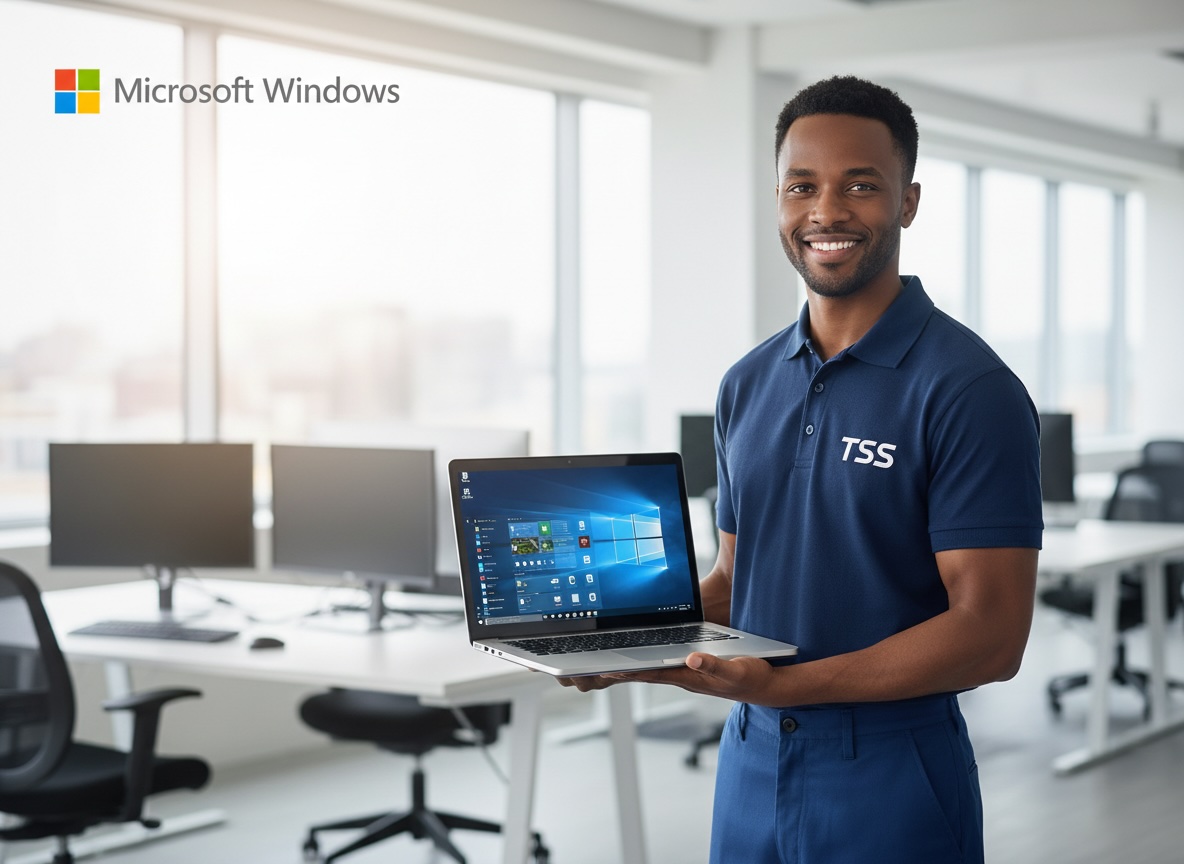
When you look around offices, schools, and home workspaces, one pattern is hard to miss: Microsoft Windows is still everywhere. Despite the rise of macOS, ChromeOS, Linux distributions, and mobile-first workflows, a huge number of people and businesses continue to pick Windows as their primary operating system.
As a tech support business, we see this choice up close every day. Here are the most common reasons people still choose Windows for their computers—and what that means for setup, maintenance, and support.
1. Familiarity And Comfort
For many users, Windows is what they first learned on. That matters more than most people realize.
- Muscle memory: The Start menu, taskbar, File Explorer, Control Panel/Settings—these feel “normal” to millions of users. Switching to something new can feel like learning to drive all over again.
- Lower learning curve: Training costs (time and money) are lower when staff already know the basics of the system.
- Consistent workflow: From Windows XP to Windows 11, a lot has changed, but the basic model—desktop, taskbar, windows, right‑click menus—remains recognizable.
Support takeaway: When users are already comfortable with Windows, tech support can focus less on basic navigation and more on productivity, security, and problem solving.
2. Compatibility With Critical Software
A major reason people stick with Windows is that their must‑have software runs best—or only—on Windows.
- Line‑of‑business applications: Many industries (manufacturing, logistics, engineering, accounting, healthcare) rely on specialized Windows‑only applications.
- Microsoft Office and productivity tools: While Office is cross‑platform, many advanced Excel macros, Access databases, legacy templates, and add‑ins are written with Windows in mind.
- Gaming and creative tools: A huge portion of PC games and many professional creative tools (CAD, 3D modeling, niche audio/video apps) are built for Windows first.
Support takeaway: When a key application is Windows‑only, the operating system is no longer a preference—it’s a requirement. Good tech support focuses on keeping these applications stable and compatible across updates.
3. Hardware Choice And Flexibility
Windows runs on a massive variety of hardware, from budget laptops to high‑end workstations.
- Wide price range: Users can pick anything from an affordable entry‑level laptop to a powerful multi‑GPU workstation.
- Custom builds: Power users and businesses can build custom desktops for specific needs: gaming rigs, CAD workstations, video editing machines, or compact office PCs.
- Peripherals and accessories: Printers, scanners, drawing tablets, label makers, point‑of‑sale devices—many are designed with Windows drivers and management tools first.
Support takeaway: This flexibility is a strength, but it also increases complexity. A tech support partner is valuable for choosing the right hardware mix, configuring drivers, and maintaining compatibility.
4. Integration With Business Environments
In business and education, Windows often fits cleanly into existing infrastructure.
- Active Directory and Group Policy: IT teams can centrally manage user accounts, security policies, and software deployment.
- Microsoft 365/Entra ID (Azure AD) integration: Sign‑on, device management, and identity services work smoothly with Windows PCs.
- Standardization: Many organizations standardize on Windows so they can have a consistent, manageable environment across departments and locations.
Support takeaway: When an environment is already built around Windows, adding more Windows systems is simple. Tech support focuses on integration, policy, and automation rather than figuring out a mix of platforms.
5. Strong Backward Compatibility
People and organizations often keep important software and files for many years. Windows is known for giving old software a surprisingly long life.

- Legacy apps: Older accounting programs, databases, or industry‑specific tools that were written decades ago often still run on modern Windows, sometimes with minor tweaks or compatibility modes.
- File formats and drivers: Windows tends to maintain support for older file formats and devices longer than many alternatives.
Support takeaway: A big part of tech support for Windows environments is helping clients keep crucial legacy tools running safely, or planning the transition from those tools to modern replacements.
6. Wide Availability Of Support And Resources
Because Windows is so widely used, help is easy to find.
- Online resources: Tutorials, forums, videos, and documentation for Windows problems are abundant.
- Third‑party tools: Backup utilities, antivirus solutions, system cleaners, remote‑management tools, and monitoring software are widely available for Windows.
- Professional expertise: Many IT professionals, help desks, and managed service providers specialize in Windows environments.
Support takeaway: The ecosystem around Windows means faster fixes and more options. A tech support partner can tap into this ecosystem and curate the best tools and practices for each client.
7. Better Fit For Certain Use Cases
Different operating systems excel at different things. Windows is still the best fit for many specific use cases:
- Gaming and high‑performance graphics: Most PC games, gaming accessories, and graphics drivers are optimized for Windows.
- Engineering and technical work: CAD, CAM, simulation, and many scientific tools have their strongest support on Windows.
- POS and kiosk systems: Many point‑of‑sale systems, kiosks, and terminals rely on Windows‑based software and drivers.
Support takeaway: For these workloads, switching away from Windows often introduces more problems than it solves. Tech support focuses on performance tuning, driver management, and reliability.
8. Continuous Development And Modern Features
Modern versions of Windows include many features users expect in a current operating system:
- Security improvements: Built‑in tools like Windows Security (Defender), BitLocker encryption, and secure boot help protect systems out of the box.
- User conveniences: Virtual desktops, improved window management (Snap layouts), better touch and pen support, and cloud integration (OneDrive) make daily use smoother.
- Regular updates: Feature updates and security patches keep systems evolving—when they’re managed properly.
Support takeaway: The update system can be a blessing or a headache. A good support strategy includes patch management, testing updates before deployment in business environments, and rollback plans.
9. Habit, Ecosystem, And Inertia
Sometimes the answer is simple: changing is hard.
- Existing investments: Companies have already invested in Windows licenses, training, procedures, and software.
- Mixed device environments: Users may have Windows PCs at work and home, which keeps their experience consistent.
- “If it isn’t broken…” mindset: When systems are “good enough,” many people prefer to avoid the risk and cost of changing platforms.
Support takeaway: Instead of forcing a platform change, tech support can often deliver more value by optimizing and securing the Windows environment people already have.
What This Means For Your Tech Support Strategy
If you or your business relies on Windows, you’re in good company. But the same factors that make Windows popular—hardware variety, huge software ecosystem, constant updates—also introduce complexity and risk.
A strong Windows‑focused support strategy should include:
- Proactive maintenance: Regular updates, driver checks, and hardware health monitoring.
- Security hardening: Antivirus, firewalls, encryption, and sensible user permissions.
- Backup and recovery: Tested backup solutions so that hardware failures or ransomware don’t become disasters.
- Standardization where possible: A curated list of approved hardware, software, and configurations to simplify support.
- Documentation and training: Clear guides and short trainings so users can handle simple tasks and recognize potential problems early.
By understanding why Windows is the platform of choice for so many users, a tech support provider can better design services, respond to real‑world needs, and keep systems running smoothly day after day.